

Paris has undergone a fundamental transformation over the last decade, evolving from a car-centric capital into a global model for cycling and pedestrian-friendly urban design.
This shift was catalyzed in 2014 with the election of Mayor Anne Hidalgo, who made ambitious promises to overhaul the city's bike infrastructure. While the initial progress was slow, a combination of public pressure from advocacy groups like Paris en Selle and the strategic use of media forced the administration to accelerate its plans.
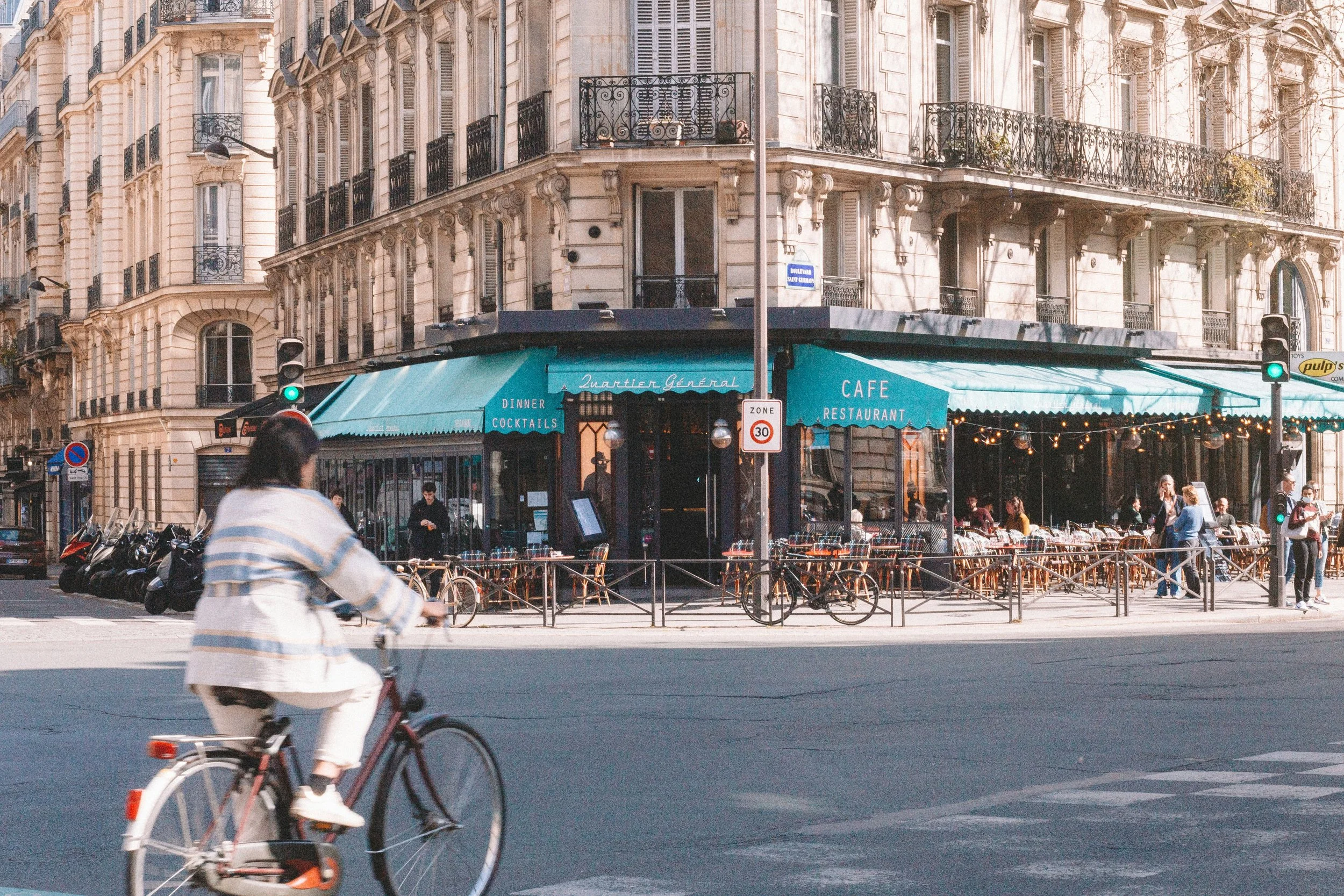
We were very happy to talk to their spokesperson for political advocacy, Corentin Roudautand learn from their experience.
And today, with the occasion of the International Bike Day, we present you this interview.
Spo: Could you tell us about how you got involved with Paris en Selle and what the city looked like for cyclists and pedestrians when you first began?
Corentin Roudaut: When I moved to Paris, there were a lot of cars and it was a little scary, so I stopped using my bike for a little bit. Two years later, in 2018, the city built a new bike lane through my new neighborhood. So I was like, okay, time to try again, and I have never stopped since then. That is what got me to use a bike in Paris.
What got me to join Paris en Selle was at the time I had to go across Paris to go to work and I lived in the eastern side of the city. I had to go to work in the western side, like a lot of Parisians. It is important to know that there is quite a big divide between the two sides of the city. The east is much more left wing, much less cars and more bikes. The further I was going for my commute, the less infrastructure I had and I wanted to change that. That is how I got involved in bike advocacy.
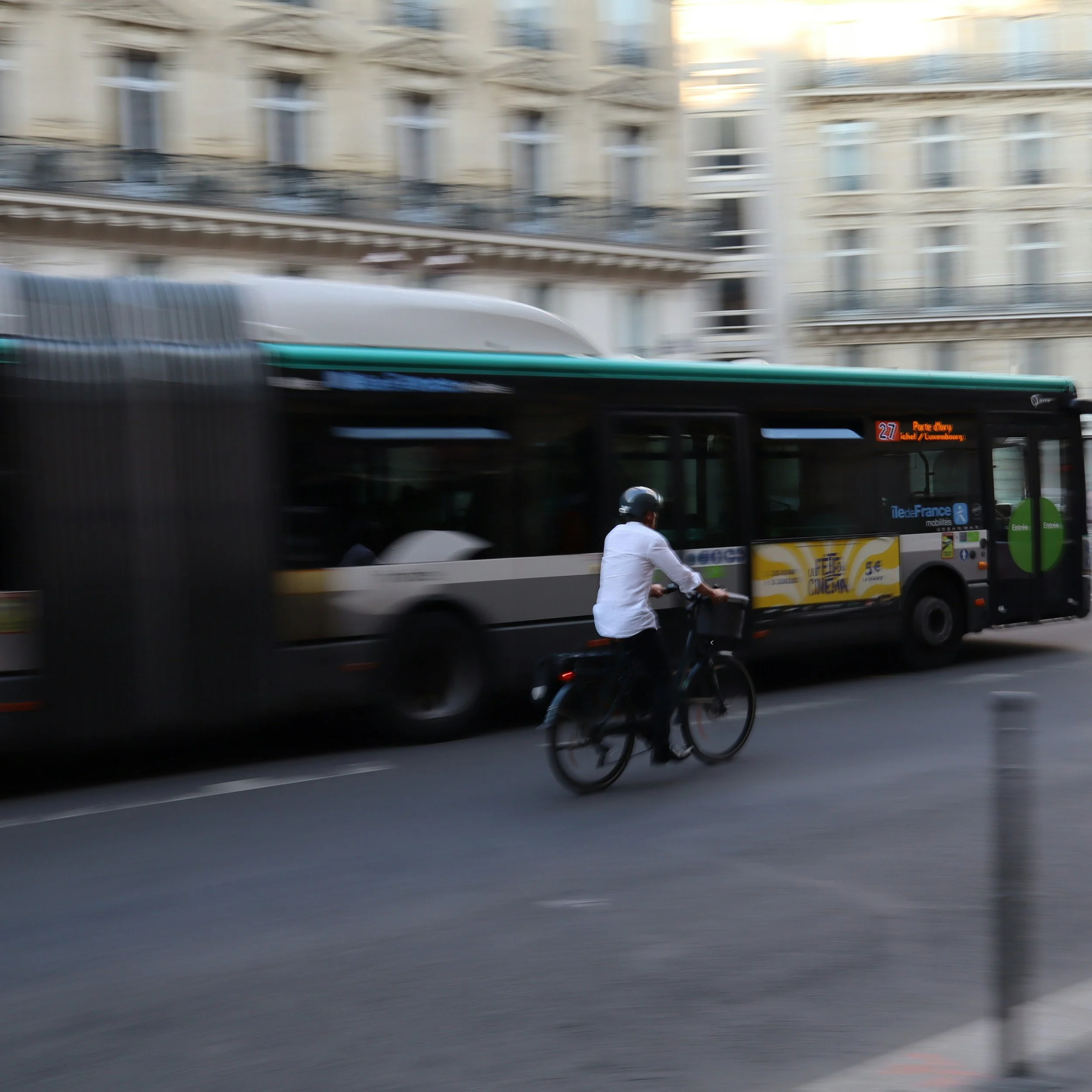
“Two years later, in 2018, the city built a new bike lane through my new neighborhood. So I was like, okay, time to try again, and I have never stopped since then.”
SpO: How did the relationship between civil societies and NGOs evolve with the mayor's office? You have the grassroots movement, but then you need to organize yourself and work with the public administration.
Corentin Roudaut: There is actually quite a long history that not many people know. Organizations that advocated cycling started from the 1970s with the first oil crisis especially. People started advocating for bikes, but they were not listened to. The first changes happened in the 1990s. We still had a right wing mayor back then, but the first cycling organizations got some successes. Bikes got legalized in the bus lanes. They were able to close the banks of the river every Sunday, the highway that is along the river. Because this is France, we also had metro strikes quite often, which meant that people used their bikes to go to work.
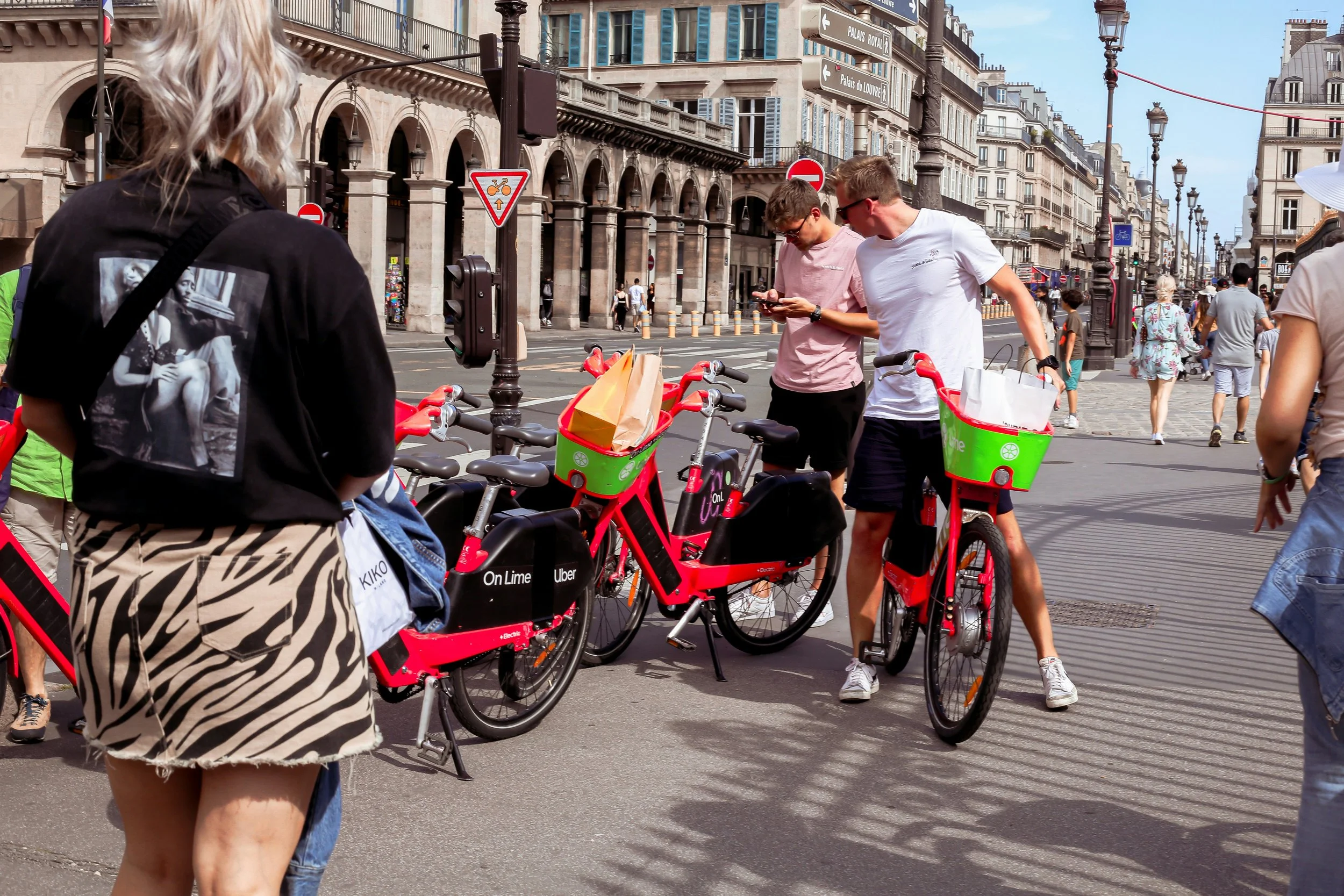
In 2001 we got our first left-wing mayor, who started the bike sharing program in order to distinguish himself. At the time we did not really have any bike lanes, but at least people had an easy way to rent a bike and see for themselves that bikes can be used around the city.
In 2014, Anne Hidalgo was elected and that is also when we were created. She had promised a lot of new cycling infrastructure, but for the first three years she did not do anything, so we went to the media and denounced it. We created a website that said Hidalgo only realized 4% of what she promised, which made them move a little bit. Three years later, when she was up for reelection, they had done 40% of what they promised.
We also organized street protests when necessary. For example, we had a three-lane bridge that was completely closed to bikes and buses. We went on the bridge and occupied it with bikes. We got kicked out by the police, but still the message came across.
We also try to work with the city in a smart way and be a partner of the city. We have a relationship based on confidence, where they invite us to private meetings to tell us what they are about to do and how we can help them achieve their plans. Sometimes they give us private information that we keep for ourselves. We are really seen as partners of the city and not adversaries, which is why we were able to achieve stuff and we take pride in being constructive.We were very happy to talk to their spokesperson for political advocacy, Corentin Roudautand learn from their experience.
SpO: When you started your website and were a critical voice for the administration, did you find that you had to maintain a balance between critical voices and still getting access to decision makers?
Corentin Roudaut: This balance is quite difficult to maintain. In every decision we make, that is what we think of first. We talk to every side of the political spectrum, from very left leaning districts to some that are very right leaning. We are present in every district of Paris and we talk to every mayor. We are not a partisan organization. The only side we take is the side of cycling. When things are bad, we are not afraid to say it, but at the same time, we always try to maintain a working relationship with every elected official.
SpO: Have there been moments where the partnership with the mayor's office put your credibility at risk with the general public?
Corentin Roudaut: Especially the right wing, which has been in opposition for 25 years now, tries to say that we are painted politically. For example, the founder of our association left to create his consulting company and got awarded some contracts from the city to design their new bike lane. That got denounced by the opposition, but for us it is normal because he is now an expert. It does not detract from our relationship.
SpO: We see this in Romania as well, where the right wing is very talkative but less focused on action. Did you face online hate and trolls?
Corentin Roudaut: We see that here and our community manager works hard to block social media trolls. After the COVID lockdown the mayor’s office created a lot of temporary bike lanes, which was something that we had advocated for. The problem was that the temporary infrastructure used yellow paint, which is quite ugly. It started a counter movement on social media where people denounced how Paris became a trashy city and the yellow paint was a symbol of that. That movement got quite a bit of traction, but we always tried to stay out of it. We want to maintain our credibility and not lean into these social media fights that are not productive.
When I communicate to elected officials, I am always like “you are not doing enough, it needs to go faster”. But when I communicate in the national or international media, I always say the transformation is great. It is a matter of balance. We have decided to be very positive about bike riding in general. The message we are trying to get through is that riding a bike is the best way to get around the city: fast, reliable, and simply fun. Paris is one of the most beautiful cities in the world and the best way to see is by bike.
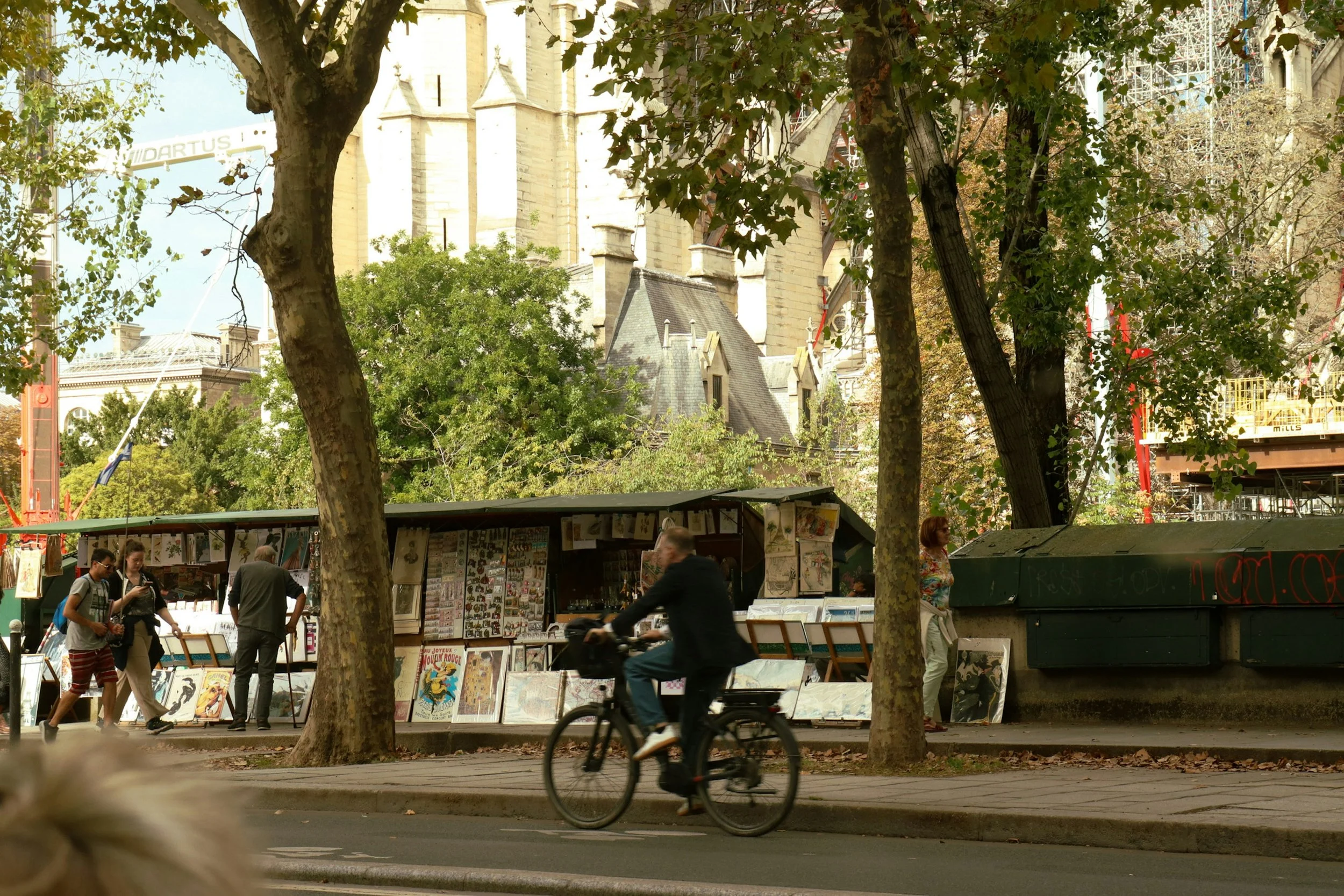
“The message we are trying to get through is that riding a bike is the best way to get around the city: fast, reliable, and simply fun. Paris is one of the most beautiful cities in the world and the best way to see is by bike.”
SpO: How did you win credibility and access to the media as a relatively new NGO?
Corentin Roudaut: What we found in France is that our media is always looking for experts to talk about the subject. We were able to be identified as experts for bikes in the city and we built personal relationships with some journalists. Whenever they want to write an article about cycling, they will call us.
We built this by being present in the public sphere. For example, last month we had elections in Paris. During the weeks before the elections, we were out in the streets to give out leaflets, not to advocate for any candidates, but to advocate for our proposals. By just being out there and giving out leaflets, it is actually a great way to be seen by people and to recruit new members.
SpO: In our organization, no one is getting paid and we are 100% volunteers. How are you structured internally so that projects are not just dependent on one or two people?
Corentin Roudaut: Actually, we are also 100% volunteers. We had one employee that we hired on a temporary contract for the election campaign, but she has left now. We have a little over 1,000 paying members at the moment. For the election campaign, we had about 150 active volunteers. That is our strength; even if we do not have a full time employee, we have a lot of people that we can activate when we have a specific campaign.
At the same time, there are projects that we would like to do but we cannot because we do not have anybody to take care of it. For example, I met with the CEO of the local bus company to discuss how bikes and buses can share the road. That relationship is important, but unfortunately, I have other things to do and I cannot maintain this project.
Since we do not have any political affiliation, it also means that we refuse any sort of public subsidies. It is a founding principle for us. That is also why we do not have an employee, because we do not have the funds to hire someone. We are very selective about partnerships and sponsorships.
SpO: How do you keep volunteers engaged and energized over so many years?
Corentin Roudaut: The membership fee is only five euros, but we always ask for donations. We actually had a big problem a few years ago where our automatic email system to remind people to renew their membership broke for a few months. We lost a third of our members just because of that, and it took us three years to get back where we were.
Regarding engagement, we know that people are going to get tired or burn out. We know that people are going to leave eventually. Out of the team that founded our organization in 2015, nobody is here anymore. We mostly work on trying to get new people to join and finding new volunteers.
In 2023, we had two people running most of the things and they burned out and left. After that, we said we would try to spread out the work among as many people as possible. As soon as we have a new subject, we try to look for the one person that is the best for it. We split the communications work; I have a friend who does mostly the local media and I do the international media. It takes work to train people, but it is rewarding because nobody gets too much work at once. We have about 25 local groups in total across the districts and inner circles of Paris.
SpO: What are the biggest mistakes you have made and what would you do differently?
Corentin Roudaut: One mistake we made was to give too many responsibilities to too few people. Something we have not achieved yet is trying to get disadvantaged groups into cycling and into our organization. We are very white and we have a lot of men; less than a third of our members are women. There is a lot of immigrant population in Paris who are still using their cars. It’s difficult for us to get this population represented and we are still looking for responses to that.
SpO: Have you seen clashes between cyclists and pedestrians, and how do you navigate that?
Corentin Roudaut: It was not a problem at all until about two years ago, but now there are a lot of complaints about bikes not following any rules, not stopping at red lights, or not letting pedestrians cross.
We argue that first it is a problem of infrastructure. A lot of old bike lanes were created directly on the pavement, and that should stop. Bike lanes should be on the road, not on the pedestrian space, so we have a clear separation. For behavior issues, we advocate for police enforcement focused on the most dangerous actions. If a bike or car runs a red light while a pedestrian is crossing, they should be fined. For us, it is first infrastructure and then second enforcement.
Curious about how Paris became one of Europe's leading cycling cities? Learn more about Paris en Selle and its successful advocacy efforts at https://parisenselle.fr/.